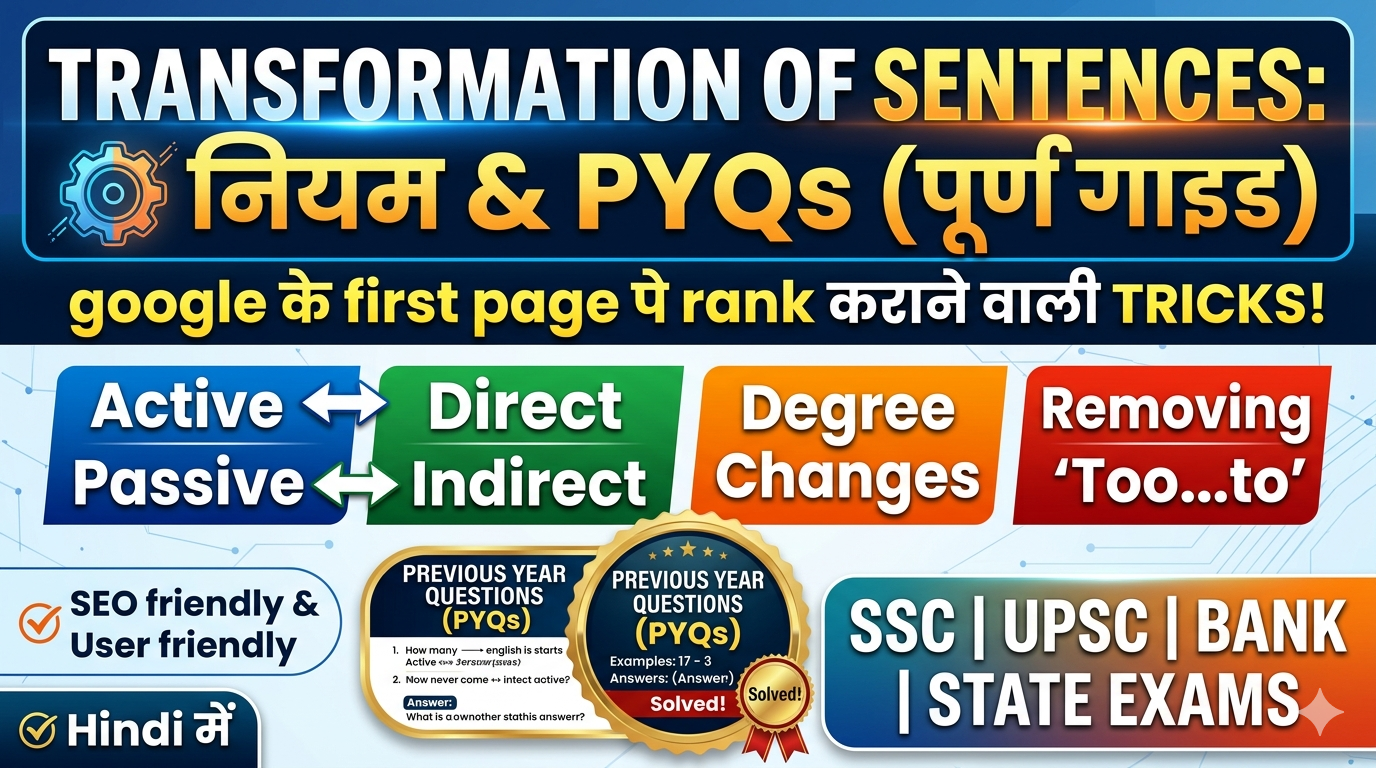
English Grammar में Transformation of Sentences एक ऐसा महत्वपूर्ण अध्याय है, जिससे लगभग हर प्रतियोगी परीक्षा (जैसे SSC CGL, CHSL, Teaching Exams, और State PSC) में प्रश्न पूछे जाते हैं।
इस ब्लॉग में हम न केवल इसके नियमों को समझेंगे, बल्कि पिछले वर्षों के प्रश्नों (PYQs) का भी अभ्यास करेंगे ताकि आप परीक्षा में 100% स्कोर कर सकें।
Transformation of Sentences क्या है?
वाक्यों के रूप को बदलना (Transformation) का अर्थ है—किसी वाक्य के व्याकरणिक ढांचे (Grammatical Structure) को इस तरह बदलना कि उसका अर्थ (Meaning) न बदले।
Results


#1. Everyone knows him. (Change to Negative Interrogative). [High Court LDC Exam 2016]
जब हम एक Assertive Sentence (साधारण वाक्य) को Negative Interrogative (नकारात्मक प्रश्नवाचक) में बदलते हैं, तो उसका अर्थ (Meaning) नहीं बदलना चाहिए।
Original Sentence: “Everyone knows him.” (उसे हर कोई जानता है।)
Transformation: इसे एक ऐसे प्रश्न में बदलें जिसका उत्तर “हाँ” हो। अगर हम पूछते हैं, “उसे कौन नहीं जानता?”, तो इसका सीधा मतलब निकलता है कि “उसे सब जानते हैं।”
Key Rule for Exams
यदि वाक्य Every + Body/One से शुरू होता है, तो उसे Interrogative बनाते समय अक्सर Who + does not का प्रयोग किया जाता है।
Example:
Assertive: Everybody likes flowers.
Interrogative: Who does not like flowers? (फूल किसे पसंद नहीं होते? अर्थात, सबको होते हैं।)
#2. The accused was hiding important evidence. (Change to Negative) [High Court LDC Exam 2016]
व्याख्या
किसी भी Assertive Sentence (सकारात्मक वाक्य) को Negative (नकारात्मक) में बदलने के लिए, हमें मुख्य रूप से Helping Verb (सहायक क्रिया) के बाद ‘not’ का प्रयोग करना होता है।
Original Sentence: “The accused was hiding important evidence.” (आरोपी महत्वपूर्ण सबूत छिपा रहा था।)
Rule: Subject + Helping Verb (was/were) + not + Main Verb (v+ing) + Object.
Transformation: “The accused was not hiding important evidence.” (आरोपी महत्वपूर्ण सबूत नहीं छिपा रहा था।)
#3. What a beautiful day! (Change to Assertive) [High Court LDC Exam 2016]
जब हम किसी विस्मयादिबोधक वाक्य को Assertive में बदलते हैं, तो भावनाओं की तीव्रता को दर्शाने के लिए ‘What’ या ‘How’ जैसे शब्दों को हटाकर ‘Very’ या ‘Great’ जैसे शब्दों का प्रयोग करते हैं, या वाक्य को एक स्पष्ट सूचना की तरह लिखते हैं।
Exclamatory: “What a beautiful day!” (कितना सुंदर दिन है!)
Assertive: “It is a very beautiful day” या Indirect speech में: “He exclaimed that it was a beautiful day.“
#4. These repairs will take a long time. (Change into Negative) [RPSC LDC Exam-2016]
व्याख्या
यह वाक्य Future Simple Tense (will + verb) में है। किसी भी ‘will’ वाले वाक्य को Negative (नकारात्मक) बनाने का नियम बहुत सरल है:
Rule: Subject + will + not + Verb (1st form) + Object.
Original Sentence: “These repairs will take a long time.” (इन मरम्मतों में लंबा समय लगेगा।)
Transformation: “These repairs will not take a long time.” (इन मरम्मतों में लंबा समय नहीं लगेगा।)
#5. I have not seen your brother here. (Change into Affirmative) [RPSC LDC Exam-2016]
व्याख्या
किसी Negative Sentence (नकारात्मक वाक्य) को Affirmative (सकारात्मक वाक्य) में बदलते समय हमें वाक्य का Tense (काल) और Subject-Verb Agreement (कर्ता और क्रिया का मेल) वैसा ही रखना होता है, बस ‘not’ को हटा दिया जाता है।
Original Sentence: “I have not seen your brother here.”
यह वाक्य Present Perfect Tense (have + 3rd form of verb) में है।
Rule: Subject + have/has + Verb (3rd form) + Object.
Transformation: “I have seen your brother here.” (मैंने आपके भाई को यहाँ देखा है।)
#6. Identify the sentences given below. The sun rises in the east. [RPSC LDC Exam-2011]
“The sun rises in the east” एक Universal Truth (सार्वभौमिक सत्य) है। ऐसे वाक्यों को हमेशा Present Simple Tense में लिखा जाता है और ये स्वभाव से Affirmative होते हैं।
#7. Alas that youth should pass away! [RPSC LDC Exam-2011]
व्याख्या
यह वाक्य एक Exclamatory Sentence (विस्मयादिबोधक वाक्य) है। इसकी पहचान के मुख्य कारण निम्नलिखित हैं:
Interjection (विस्मयादिबोधक शब्द): वाक्य की शुरुआत “Alas” शब्द से हुई है। “Alas” का प्रयोग गहरा दुख, अफ़सोस या शोक (grief or regret) प्रकट करने के लिए किया जाता है।
Punctuation (विराम चिन्ह): वाक्य के अंत में (या “Alas” के बाद) Exclamation Mark (!) का प्रयोग होता है, जो तीव्र भावनाओं को दर्शाता है।
Meaning: वाक्य का अर्थ है— “अफ़सोस कि जवानी बीत जानी चाहिए!” यह केवल एक तथ्य नहीं है, बल्कि एक भावनात्मक अभिव्यक्ति है।
#8. Choose the correct negative form (without change of meaning) of the following sentence from the options given below. She is sometimes clever. [महिला पर्यवेक्षक परीक्षा-06.01.2019]
Transformation Rule: “Sometimes” to “Not Always”
प्रतियोगी परीक्षाओं के लिए यह एक महत्वपूर्ण नियम है:
अगर वाक्य में Sometimes + Adjective हो।
तो उसे Negative में बदलने के लिए Not always + Antonym (विलोम) का प्रयोग किया जाता है।
एक और उदाहरण:
Affirmative: He is sometimes late.
Negative: He is not always punctual. (वह हमेशा समय का पाबंद नहीं होता।)
#9. Change the following sentence to the interrogative from [महिला पर्यवेक्षक परीक्षा 06.01.2019] A wise man is honoured everywhere.
-
Rule: यदि वाक्य में ‘Everywhere’ (हर जगह) आता है, तो प्रश्न अक्सर ‘Where’ और ‘not’ के साथ बनाया जाता है ताकि उसका उत्तर “हर जगह” ही निकले।
Transformation: “Where is a wise man not honoured?” (बुद्धिमान व्यक्ति का सम्मान कहाँ नहीं होता? अर्थात, सब जगह होता है।)
#10. Choose the correct negative from of the following sentence from the given options: She is going out. [Tax Assistam Exam-14.10.2018]
यह वाक्य Present Continuous Tense (is/am/are + v1+ing) में है। किसी भी निरंतरता वाले वाक्य को Negative (नकारात्मक) बनाने का नियम सबसे सरल होता है:
Rule: Subject + is/am/are + not + Verb (ing) + Object.
Original Sentence: “She is going out.” (वह बाहर जा रही है।)
Transformation: “She is not going out.” (वह बाहर नहीं जा रही है।)
#11. Choose the correct option for Assertive to Negative transformation for the sentence given: Human is mortal. [Tax Assistant-14.10.2018]
जब हम किसी Assertive वाक्य को Negative में बदलते हैं और निर्देश दिया गया हो कि अर्थ नहीं बदलना चाहिए (जिसे व्याकरण में Transformation कहते हैं), तो हम “Not + Antonym” (विलोम शब्द) का प्रयोग करते हैं।
Original Sentence: “Human is mortal.” (मानव मरणशील है।)
Logic: यदि मानव मरणशील है, तो इसका मतलब है कि वह अमर (immortal) नहीं है।
Transformation: “Human is not immortal.”
#12. Change from Interrogative to Assertive. Can their fame ever fade? [TaxAmant-14.10.2018]
-
Rule:
‘Can’ का प्रयोग क्षमता या संभावना के लिए होता है, जिसे बदलते समय ‘Can not’ या ‘Never’ में बदला जाता है।
‘Ever’ (कभी) हमेशा ‘Never’ (कभी नहीं) में बदल जाता है।
Transformation: “Their fame can never fade.” (उनकी प्रसिद्धि कभी फीकी नहीं पड़ सकती।)
#13. Choose the correct option changing the following sentence into assertive: How childish your talks are: [LDC-09.09.2018]
जब हम “How” या “What” से शुरू होने वाले विस्मयादिबोधक वाक्यों को साधारण वाक्यों में बदलते हैं, तो तीव्रता (intensity) को दर्शाने के लिए हम ‘very’ या ‘great’ जैसे शब्दों का प्रयोग करते हैं।
Exclamatory: “How childish your talks are!” (तुम्हारी बातें कितनी बचकानी हैं!)
Assertive Rule: Subject + Verb + very + Adjective.
Transformation: “Your talks are very childish.” (तुम्हारी बातें बहुत बचकानी हैं।)
#14. Choose the correct transformation form assertive to interrogative: We should not waste time in this fruitless occupation. [LDC-09.09.2018]
The correct answer question is (3) Why should we waste time in this fruitless occupation?
Understanding the Logic (नियम)
यह प्रश्न Assertive (साधारण कथन) को Interrogative (प्रश्नवाचक) में बदलने का है। व्याकरण के नियमों के अनुसार, जब किसी नकारात्मक कथन (Negative statement) को प्रश्न में बदला जाता है, तो वह प्रश्न अक्सर सकारात्मक (Affirmative) बन जाता है ताकि उसका अर्थ सुरक्षित रहे।
Original Sentence: “We should not waste time in this fruitless occupation.” (हमें इस निष्फल कार्य में समय बर्बाद नहीं करना चाहिए।)
Transformation Logic: इस वाक्य को एक ऐसे प्रश्न में बदलें जिसका स्वाभाविक उत्तर “नहीं” हो।
Rule: जब वाक्य में ‘Should not’ के साथ एक तर्क दिया गया हो, तो प्रश्न अक्सर ‘Why’ (क्यों) से शुरू होता है।
#15. Choose the correct transformation from assertive to interrogative: Man cannot die better than facing fearful odds. [LDC-09.09.2018]
-
Transformation Rule:
अगर Assertive वाक्य Negative (cannot) है, तो Interrogative वाक्य Affirmative (सकारात्मक) होगा।
यहाँ ‘How’ का प्रयोग यह पूछने के लिए किया गया है कि “क्या कोई और बेहतर तरीका हो सकता है?” (जिसका अर्थ है—नहीं, कोई और तरीका नहीं है)।
Transformation: “How can man die better than facing fearful odds?”
मुख्य रूप से इसमें निम्नलिखित बदलाव शामिल होते हैं:
- Interchange of Active and Passive Voice.
- Interchange of Direct and Indirect Speech.
- Interchange of Degrees of Comparison (Positive, Comparative, Superlative).
- Interchange of Affirmative and Negative Sentences.
- Removal of ‘Too’.
1. Interchange of Degrees of Comparison
परीक्षाओं में अक्सर Degree बदलने के प्रश्न आते हैं।
- Positive: No other city in India is as big as Mumbai.
- Comparative: Mumbai is bigger than any other city in India.
- Superlative: Mumbai is the biggest city in India.
Pro Tip: यदि वाक्य में ‘One of the’ का प्रयोग हो, तो Comparative में ‘Most other’ का प्रयोग करें।
2. Removal of Adverb ‘Too’
जब वाक्य में ‘Too…to’ का प्रयोग होता है, तो उसे ‘So…that’ में बदला जाता है।
- Example: He is too weak to walk.
- Transformation: He is so weak that he cannot walk.
3. Affirmative to Negative (बिना अर्थ बदले)
यह सबसे ट्रिकी हिस्सा है। यहाँ हम विलोम शब्दों (Antonyms) का प्रयोग करते हैं।
- Affirmative: He is a wise man.
- Negative: He is not a foolish man. (अर्थ वही रहा)
Transformation of Sentences: Previous Year Questions (PYQs)
यहाँ कुछ महत्वपूर्ण प्रश्न दिए गए हैं जो पिछली परीक्षाओं में बार-बार पूछे गए हैं:
Q1. Change into Negative: “As soon as the thief saw the police, he ran away.”
- Answer: No sooner did the thief see the police than he ran away.
Q2. Change the Degree: “Iron is more useful than any other metal.” (Into Superlative)
- Answer: Iron is the most useful metal.
Q3. Remove ‘Too’: “The tea is too hot for me to drink.”
- Answer: The tea is so hot that I cannot drink it.
Q4. Interrogative to Assertive: “Who can touch the sky?”
- Answer: No one can touch the sky.
निष्कर्ष (Conclusion)
Transformation of Sentences पर पकड़ बनाने का सबसे अच्छा तरीका है—ज्यादा से ज्यादा अभ्यास। ऊपर दिए गए PYQs आपकी समझ विकसित करने में मदद करेंगे। अगर आप किसी विशेष नियम के बारे में विस्तार से जानना चाहते हैं, तो नीचे कमेंट करें!