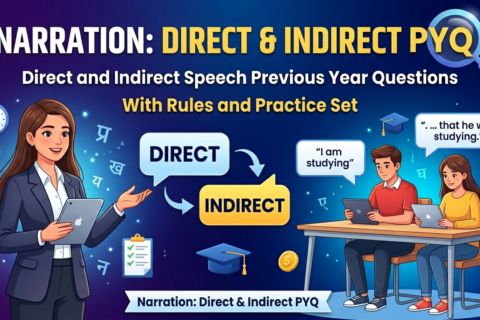
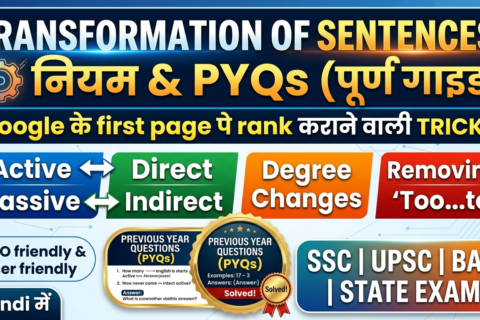
आप SSC, Banking, Railway या किसी State Level Exam की तैयारी कर रहे हैं? यदि हाँ, तो आप जानते होंगे कि English Grammar में Narration (Direct and Indirect Speech) का कितना बड़ा महत्व है। अक्सर छात्र नियमों को तो रट लेते हैं, लेकिन जब बात PYQ (Previous Year Questions) की आती है, तो वे उलझ जाते हैं।
आज के इस ब्लॉग पोस्ट में हम Narration Direct Indirect PYQ पर विस्तार से चर्चा करेंगे और आपको कुछ ऐसे चुनिंदा प्रश्न देंगे जो पिछली कई परीक्षाओं में बार-बार पूछे गए हैं।
Results


#1. She asked me how long I had worked there. (Change to Direct Narration) [High Court LDC Exam 2016]
निम्नलिखित नियमों का पालन किया जाता है:
Tense (काल) में बदलाव:
Indirect वाक्य में “had worked” (Past Perfect) का प्रयोग हुआ है।
नियम के अनुसार, यदि Reporting Verb ‘Past’ में हो, तो Direct Speech का Present Perfect बदलकर Past Perfect हो जाता है। इसलिए “had worked” वापस “have worked” में बदल जाएगा।
Pronoun (सर्वनाम) में बदलाव:
Indirect में “I” का प्रयोग हुआ है। चूँकि पूछने वाली “She” है और वह मुझसे (“me”) पूछ रही है, तो Direct Speech में वह मुझे “you” कहकर संबोधित करेगी।
Place/Time (स्थान/समय) में बदलाव:
Indirect Narration में ‘here’ को ‘there’ में बदल दिया जाता है। अतः Direct Narration में बदलते समय ‘there’ वापस ‘here’ हो जाएगा।
Sentence Structure (वाक्य संरचना):
यह एक प्रश्नवाचक वाक्य (Interrogative) है, इसलिए सहायक क्रिया (have) कर्ता (you) से पहले आएगी।
#2. She said, “You may need my help.” (Indirect Narration) [High Court LDC Exam 2016]
ध्यान रखें कि ‘may’ का ‘might’ में परिवर्तन और ‘Pronoun’ का सही तालमेल ही सही उत्तर की पहचान कराता है।
अन्य विकल्प गलत क्यों हैं?
(1) She told that I may need my help: यहाँ ‘may’ को ‘might’ में नहीं बदला गया और ‘my help’ को भी नहीं बदला गया।
(2) She told that I must need her help: यहाँ ‘may’ को ‘must’ में बदल दिया गया है, जो व्याकरण के अनुसार गलत है।
(3) She told that I might need help: इसमें ‘her’ (possessive pronoun) को हटा दिया गया है, जिससे वाक्य का अर्थ अधूरा रह जाता है।
#3. The teacher said, “Have you submitted your form” (Change to Indirect Narration) [High Court LDC Exam 2016]
Narration के प्रश्नों में अक्सर Tense और Pronoun के बदलावों पर ही ध्यान केंद्रित किया जाता है। ‘Have’ वाले प्रश्नों में हमेशा ‘Had’ वाला विकल्प ही सही होने की संभावना सबसे अधिक होती है।
Reporting Verb में बदलाव:
प्रश्नवाचक वाक्यों में ‘said’ को ‘asked’ में बदल दिया जाता है।
Connective (संयोजक):
जब प्रश्न ‘Yes/No’ वाले हों (जो Helping Verb जैसे Have, Is, Are से शुरू होते हैं), तो Inverted commas हटाकर ‘if’ या ‘whether’ का प्रयोग किया जाता है।
Sentence Structure (वाक्य की संरचना):
Indirect में वाक्य Interrogative (प्रश्नवाचक) नहीं रहता, बल्कि Assertive (साधारण) बन जाता है। यानी ‘Helping Verb + Subject’ के स्थान पर ‘Subject + Helping Verb’ का प्रयोग होता है।
इसलिए “Have you” बदलकर “I had” हो गया।
Tense (काल) में बदलाव:
चूँकि Reporting Verb ‘said’ (Past) में है, इसलिए Direct Speech का Present Perfect (have submitted) बदलकर Past Perfect (had submitted) हो जाएगा।
Pronoun (सर्वनाम) में बदलाव:
You (Second Person): यह ऑब्जेक्ट (me) के अनुसार बदलकर ‘I’ हो गया।
Your: यह बदलकर ‘my’ हो गया।
#4. Choose the correct Reported Form – “Could you pass the sugar, please”, she said. [RPSC LDC Exam-2016]
जब भी प्रश्न में Could/Would/Please आए, तो विकल्पों में सबसे पहले ‘Requested’ वाले विकल्प को देखें। 99% मामलों में वही सही उत्तर होता है।
अन्य विकल्प गलत क्यों हैं?
(2) She advised me…: ‘Advise’ का प्रयोग सलाह देने के लिए किया जाता है (जैसे: “You should work hard”)। चीनी माँगना कोई सलाह नहीं है।
(3) She ordered me…: ‘Order’ का प्रयोग आदेश देने के लिए होता है। “Could” और “Please” के साथ आदेश का भाव नहीं जुड़ता। साथ ही, ‘me’ के बाद ‘to’ का प्रयोग नहीं किया गया है।
(4) She told to me…: ‘Told’ के साथ ‘to’ का प्रयोग नहीं होता (सीधे ‘told me’ होता है)। साथ ही, यह एक साधारण वाक्य नहीं बल्कि निवेदन है, इसलिए ‘requested’ अधिक सटीक शब्द है।
#5. She said, “Don’t wait for me after seven.” [RPSC LDC Exam-2016]
सही विकल्प: (1) She told me not to wait for her after seven.
Reporting Verb में बदलाव:
जब वाक्य में कोई निर्देश या बात कही जाए, तो ‘said’ को ‘told’ में बदल दिया जाता है। चूँकि यहाँ “me” (मुझसे) कहने का भाव छिपा है, इसलिए ‘told me’ का प्रयोग उचित है।
नकारात्मक वाक्य (Negative Imperative):
Direct Speech में जब वाक्य “Don’t” से शुरू होता है, तो Indirect में उसे हटाकर ‘not to’ + V1 का प्रयोग किया जाता है।
अतः “Don’t wait” बदलकर “not to wait” हो गया।
Pronoun (सर्वनाम) में बदलाव:
Me (First Person): यह Reporting Verb के ‘Subject’ (She) के अनुसार बदलता है। इसलिए “me” बदलकर “her” हो गया।
Tense में कोई बदलाव नहीं:
Imperative वाक्यों में ‘to’ के बाद हमेशा क्रिया का पहला रूप (V1) ही रहता है, इसलिए ‘wait’ में कोई बदलाव नहीं हुआ।
अन्य विकल्प गलत क्यों हैं?
(2) She tells that…: यहाँ ‘Reporting Verb’ वर्तमान काल (tells) में कर दी गई है, जबकि प्रश्न में ‘said’ (Past) है। साथ ही ‘that’ का प्रयोग यहाँ गलत है।
(3) She asks that…: ‘Asks’ का प्रयोग प्रश्न पूछने के लिए होता है, और इसके साथ ‘that’ नहीं आता।
(4) She suggests to not wait…: ‘Suggest’ के साथ सामान्यतः ‘that… should’ का प्रयोग होता है (जैसे: She suggested that I should not wait)। साथ ही, इसमें “for her” को गायब कर दिया गया है, जिससे अर्थ अधूरा है।
#6. He said, “Sonia, when is the next train ?” [RPSC LDC Exam-2016]
Explanation
Direct Speech को Indirect Speech में बदलते समय हमें कुछ मुख्य नियमों का पालन करना होता है, जो इस प्रकार हैं:
Reporting Verb: जब वाक्य प्रश्नवाचक (Interrogative) होता है, तो
saidकोaskedयाenquiredमें बदल दिया जाता है। चूँकि वह सोनिया से पूछ रहा है, इसलिए “He asked Sonia” सही है।Connective (Y/N vs Wh-): अगर प्रश्न
Wh-शब्द (जैसे: When, Where, Why) से शुरू हो, तो किसी अलग ‘that’ या ‘if’ की ज़रूरत नहीं होती। वहीWh-शब्द ही जोड़ने का काम करता है।Sentence Structure (सबसे महत्वपूर्ण): Indirect speech में प्रश्नवाचक वाक्य को सकारात्मक वाक्य (Assertive Sentence) में बदल दिया जाता है।
Direct:
...when is the next train?(Verb + Subject)Indirect:
...when the next train was.(Subject + Verb)अक्सर लोग गलती से “when was the next train” लिख देते हैं, जो कि गलत है क्योंकि Indirect Speech में सवाल नहीं पूछा जाता, बल्कि बताया जाता है कि क्या पूछा गया था।
Tense Change: यहाँ Reporting Verb (said) Past Tense में है, इसलिए अंदर का
isबदलकरwasहो जाएगा।
#7. My Friend advised me not to be hasty, [RPSC LDC Exam-2013]
व्याख्या (Explanation):
“Don’t be hasty” एक नकारात्मक आदेश/सलाह है। जब इसे Indirect में बदलते हैं, तो “Don’t” हट जाता है और not to लग जाता है। (Don’t be -> not to be)।
#8. “Shoot the prisoner”, said the tyrant. [RPSC LDC Exam-2013]
व्याख्या (Explanation):
यह एक Imperative Sentence (आज्ञावाचक वाक्य) है। ऐसे वाक्यों को Indirect Speech में बदलने के लिए
commanded (सही भाव), them (Object), और to shoot (Infinitive) का सही तालमेल है।
#9. “I have an English lesson this afternoon and I haven’t done my homework yet”, said the boy. [RPSC LDC Exam-2016]
व्याख्या (Explanation):
इसमें Tense (had, hadn't done), Pronoun (he, his) और Time (that afternoon, till then) के सभी नियमों का सही पालन किया गया है।
#10. Which of the following sentences in indirect narration is not correct- [Accountant-2012]
व्याख्या (Explanation):
विकल्प (2) में गलती: यहाँ लिखा है “…where was he going”। यहाँ
was(verb) कोhe(subject) से पहले रखा गया है, जो एक सवाल पूछने का तरीका है।सही रूप: यह “…where he was going” होना चाहिए था।
#11. He said, “Alas, how foolish I have been.!” [RPSC LDC Exam-2013]
विकल्पों का विश्लेषण:
(1) गलत है: यह वाक्य अधूरा है (“that he had been” के आगे कुछ नहीं है)।
(2) सही है: इसमें
exclaimed with regret(सही भाव),that(सही Connector),had been(सही Tense) औरvery foolish(सही तीव्रता) का प्रयोग किया गया है।(3) गलत है: यह वाक्य की संरचना (Structure) को पूरी तरह बदल देता है और यह Indirect Narration के मानक नियमों का पालन नहीं करता।
(4) गलत है: इसमें
has beenका प्रयोग किया गया है, जबकि नियम के अनुसार इसे Past Tense (had been) में होना चाहिए था।
#12. The girl asked me if I would wait for a minute [RPSC LDC Exam-2013]
विकल्पों का विश्लेषण:
(1) गलत है: इसमें Object (
me) गायब है और Inverted Commas बंद नहीं हैं।(2) गलत है: यहाँ
Canका प्रयोग हुआ है। यदि Direct मेंCanहोता, तो Indirect मेंwouldकी जगहcouldहोता।(3) सही है: यहाँ
said to me(Reporting Verb),Will(जोwouldमें बदला) औरyou(जोIमें बदला) बिल्कुल सही हैं। (नोट: विकल्प में ‘a’ गायब हो सकता है, लेकिन व्याकरणिक नियमों के अनुसार यही सबसे सटीक विकल्प है।)(4) गलत है: यहाँ
Shall Iका प्रयोग हुआ है।I(First Person) ‘The girl’ के अनुसार बदलता, जिससे Indirect मेंsheआता, न किI।
#13. “Can you ride a bicycle?” I asked Gita. [RPSC LDC Exam-2011]
विकल्पों का विश्लेषण:
(1) गलत है: यह Direct Speech को ही बिना विराम चिह्नों के लिख दिया गया है, कोई बदलाव नहीं किया गया।
(2) सही है: इसमें
whether,sheऔरcouldका सही नियमों के अनुसार प्रयोग हुआ है।(3) गलत है: यह वाक्य का अर्थ और प्रकार दोनों बदल देता है।
(4) गलत है: यह केवल एक साधारण जानकारी दे रहा है जो मूल प्रश्न से मेल नहीं खाती।
याद रखें (Quick Rule):
Direct: Can you…
Indirect: …if/whether she could…
#14. The policeman asked if I had seen the accident. [Accountant Exam-2016]
विकल्पों का विश्लेषण:
(1) गलत है: “Had you seen it?” (Past Perfect) को अगर Indirect में बदलते, तो वह “had seen” ही रहता, लेकिन इसमें ‘the accident’ शब्द गायब है और ‘it’ का प्रयोग किया गया है।
(2) गलत है: Direct Speech के प्रश्न कभी भी
ifसे शुरू नहीं होते।ifकेवल जोड़ने (Connective) के लिए Indirect में आता है।(3) सही है: यहाँ
Did(Past Indefinite) का प्रयोग हुआ है जो नियमतःhad + V3में बदलता है। साथ हीyouका परिवर्तनIमें औरaskedका प्रयोग इसे पूरी तरह सही बनाता है।(4) गलत है: “Does you see” व्याकरण की दृष्टि से अशुद्ध है (You के साथ Do आता है, Does नहीं) और यह Present Tense में है, जिसे बदलने पर Indirect में “saw” या “had seen” की जगह “saw” आना चाहिए था।
संक्षेप में:
Direct: Did you see…
Indirect: …if I had seen…
#15. The doctor said to me, “Do not swim in cold water.” In reported speech the above sentence will be- “The doctor advice me…”. [RTET 2011]
विकल्पों का विश्लेषण:
(1) गलत है: इसमें Connective ‘to’ का प्रयोग नहीं किया गया है।
(2) गलत है: Imperative वाक्यों में ‘that’ का प्रयोग नहीं किया जाता। ‘That’ का प्रयोग साधारण (Assertive) वाक्यों में होता है।
(3) सही है: यह नियम के अनुसार “not to + V1” का सही क्रम है।
(4) गलत है: “to not swim” व्याकरण की दृष्टि से अशुद्ध माना जाता है (Split Infinitive)। सही क्रम हमेशा “not to” होता है।
संक्षेप में:
Direct: Do not + Verb
Indirect: not to + Verb
#16. Reno said that he would write books. [RPSC LDC Exam-2013]
विकल्पों का विश्लेषण:
(1) गलत है: “I will be write” व्याकरण की दृष्टि से अशुद्ध है (‘be’ के बाद V1 नहीं आता)।
(2) गलत है: यहाँ ‘He’ का प्रयोग हुआ है। अगर Direct में ‘He’ (Third Person) होता, तो Indirect में भी वह ‘He’ ही रहता, लेकिन यहाँ प्रोनाउन का बदलाव दर्शाना आवश्यक है।
(3) गलत है: यहाँ ‘should’ का प्रयोग हुआ है। ‘Should’ का प्रयोग सलाह के लिए होता है, जबकि मूल वाक्य एक भविष्य की घोषणा है।
(4) सही है: यहाँ
I(Reno के लिए) औरshall(जोwouldमें बदला) का बिल्कुल सही प्रयोग हुआ है।
संक्षेप में:
Direct: I shall…
Indirect: …he would..
#17. Which of the following does not match correctly? [Accountant Exam-2012]
व्याख्या (Explanation):
विकल्प (2) में की गई गलती को समझते हैं:
Direct: He said, “You needn’t wait.”
Indirect (विकल्प में दिया गया): He said that I needn’t to wait.
गलती:
Needn'tएक Modal Verb है, जिसके बाद हमेशा क्रिया का पहला रूप (V1) आता है, ‘to’ का प्रयोग नहीं किया जाता (Bare Infinitive)।सही वाक्य: He said that I needn’t wait.
#18. Ravi said, “I posted the letter.” [RPSC LDC Exam-2011]
विकल्पों का विश्लेषण:
(1) सही है: इसमें प्रोनाउन (he), टेंस (had posted) और कनेक्टर (that) का बिल्कुल सही प्रयोग किया गया है।
(2) गलत है: यह वाक्य का अर्थ बदल देता है और व्याकरणिक रूप से रूपांतरण नहीं है।
(3) गलत है: यह एक प्रश्नवाचक वाक्य है, जबकि मूल वाक्य साधारण था।
(4) गलत है: इसमें न तो प्रोनाउन बदला गया है और न ही टेंस, जो कि Indirect Speech के नियमों के खिलाफ है।
याद रखने योग्य नियम (Quick Tip):
जब बाहर Said हो, तो अंदर के टेंस इस प्रकार बदलते हैं:
V2 (Simple Past) $\rightarrow$ Had + V3 (Past Perfect)
Is/Am/Are $\rightarrow$ Was/Were
Has/Have $\rightarrow$ Had
Direct and Indirect Speech क्या है? (संक्षिप्त परिचय)
जब हम किसी वक्ता (Speaker) की बात को दो तरह से बताते हैं, तो उसे Narration कहते हैं:
- Direct Speech: वक्ता के शब्दों को ज्यों का त्यों कहना। (जैसे: Ram said, “I am busy.”)
- Indirect Speech: वक्ता की बात का सारांश अपने शब्दों में कहना। (जैसे: Ram said that he was busy.)
Narration बदलने के मुख्य नियम (Quick Revision)
किसी भी PYQ को हल करने से पहले इन 5 सुनहरे नियमों को याद रखें:
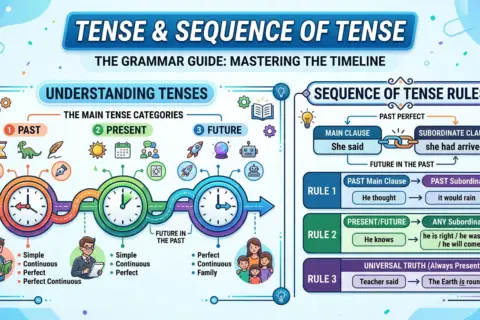
- Reporting Verb: यदि Reporting Verb ‘Past’ में है, तो Reported Speech का Tense बदलता है।
- Conjunction: साधारण वाक्यों में ‘That’, Interrogative में ‘If/Whether’ और Imperative में ‘To’ का प्रयोग होता है।
- Pronoun Change: इसे SON फॉर्मूले से याद रखें:
- Subject (1st Person)
- Object (2nd Person)
- No Change (3rd Person)
- Tense Change: Present Simple → Past Simple, Present Continuous → Past Continuous, आदि।
- Time & Distance: Now → Then, This → That, Here → There, Today → That day.
Narration Direct Indirect PYQ: Practice Set
यहाँ पिछले वर्षों (SSC CGL, CHSL, MTS) में पूछे गए कुछ महत्वपूर्ण प्रश्न दिए गए हैं। खुद को टेस्ट करने के लिए पहले उत्तर न देखें।
Q1. He said, “I have passed the examination.”
- (A) He said that he had passed the examination.
- (B) He said that he has passed the examination.
- (C) He said that he passed the examination.
- Answer: (A)
- Logic: Present Perfect, Past Perfect में बदल जाता है।
Q2. The teacher said, “The Earth revolves around the Sun.”
- (A) The teacher said that the Earth revolved around the Sun.
- (B) The teacher said that the Earth revolves around the Sun.
- Answer: (B)
- Logic: Universal Truth (सार्वभौमिक सत्य) का Tense कभी नहीं बदलता।
Q3. She said to me, “What are you doing?”
- (A) She asked me what I was doing.
- (B) She asked me what was I doing.
- Answer: (A)
- Logic: Interrogative वाक्यों में Reporting Verb ‘Asked’ में बदलती है और वाक्य ‘Assertive’ बन जाता है।
Q4. Ram said, “Alas! I am undone.”
- (A) Ram exclaimed with joy that he was undone.
- (B) Ram exclaimed with sorrow that he was undone.
- Answer: (B)
- Logic: Exclamatory वाक्यों में भावनाओं के अनुसार ‘Exclaimed with sorrow/joy’ का प्रयोग होता है।
निष्कर्ष
Narration Direct Indirect PYQ का अभ्यास करना न केवल आपके कॉन्फिडेंस को बढ़ाता है, बल्कि आपको परीक्षा के सटीक पैटर्न की जानकारी भी देता है। ऊपर दिए गए नियमों और प्रश्नों का नियमित अभ्यास करें।
क्या आपको और अधिक PYQ चाहिए? हमें कमेंट बॉक्स में बताएं या हमारे English Quiz Section पर जाकर ऑनलाइन टेस्ट दें।